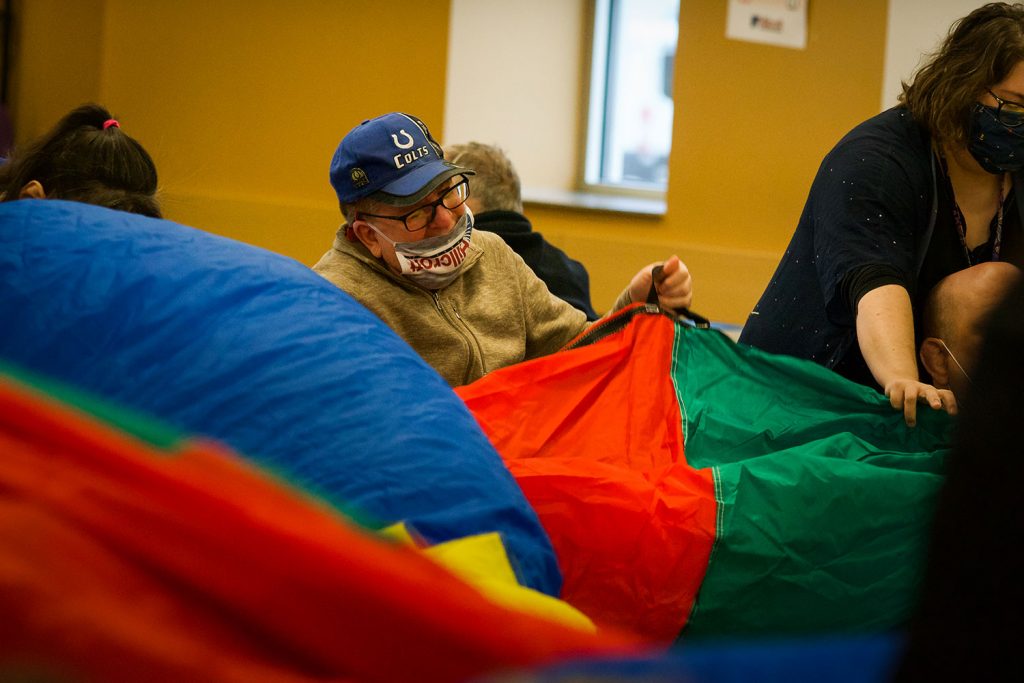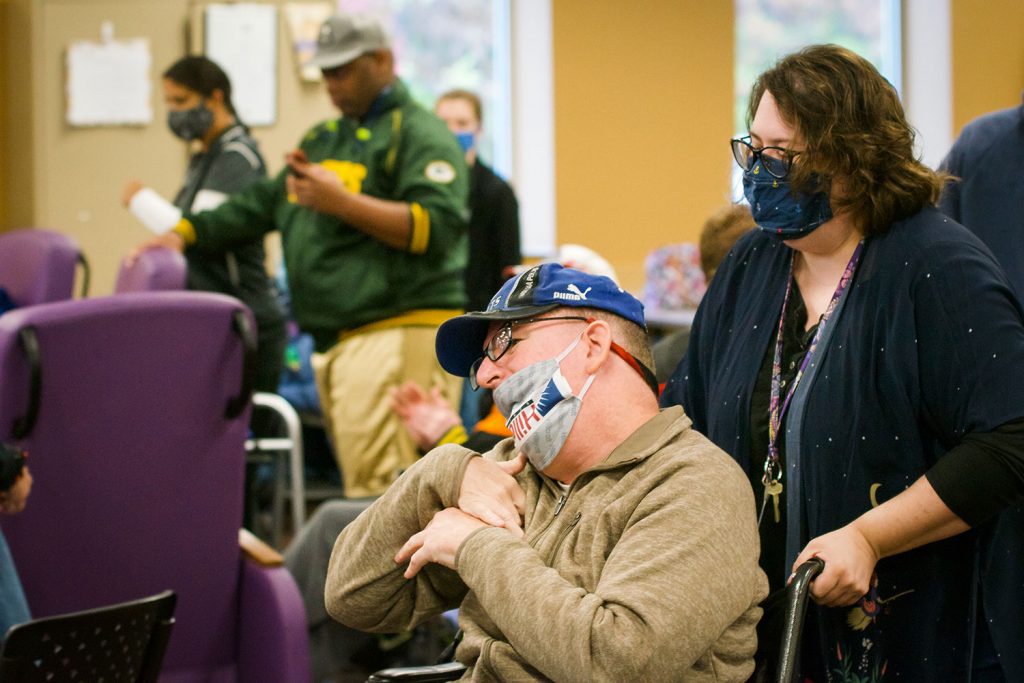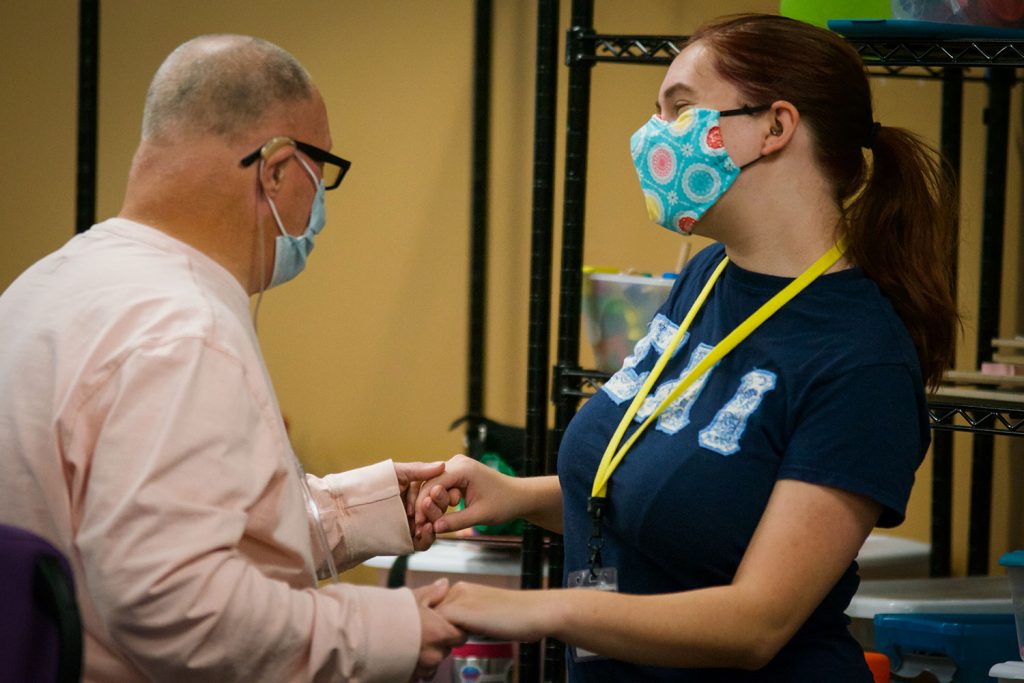

Disability awareness is a vital component of educating the community about the potential and the value of all people with disabilities in our society. Disabilities do not discriminate. 1 in 5 people have a disability. It is important for everyone to understand disability issues because there is a very high probability that every person will be affected or come in contact with a person that has a disability.
Did you know? 66% of American’s with disabilities are unemployed?
Speaking of disabilities. “People first” is the most important principle in communicating with and about people with disabilities, said Vicki Pappas, director of the Center for Planning and Policy Studies at the Indiana Institute on Disability and Community. This standard applies in a literal sense when describing people — “person with autism” is appropriate; “autistic person” is not — and in a figurative sense when interacting with someone who has a disability. “People with disabilities would prefer to be seen as people, not as objects of pity or as heroes who have overcome adversity,” she said. “When you meet someone who has a disability, say hello, make eye contact, and give yourself time to get to know that person like you would with any new acquaintance.” Below are more of Pappas’s tips for effective communication.
- DO use person-first language, especially in print. Regardless of the particular disability, put the person before the condition in every description. For example: “man who has cerebral palsy,” “girl who is deaf,” “teacher with epilepsy.”
- DON’T mention a disability if it is not relevant. “If you are writing an article about a professor’s research, and that person happens to use a wheelchair, you don’t need to mention it unless it relates somehow to the research process. This is just the same principle you would use in deciding whether to mention that someone is Jewish or Latino,” Pappas said.
- DO use specific terminology. If it is important to describe a person’s disability, be straightforward and avoid terminology like “handicapable,” “differently abled” or “special.” This type of verbiage comes across as condescending, Pappas said.
- DON’T make someone a hero for an ordinary feat. Avoid characterizing everyday activities as huge accomplishments for people with disabilities. “I’m all for including a bride with hearing loss in a wedding special, but when the headline is ‘Deaf Woman Gets Married,’ that’s insulting,” Pappas said.
- DO greet people at their eye level. When talking with a person who uses a wheelchair, it is appropriate to sit or crouch down in order to talk face-to-face, Pappas said. “Even if you are speaking through an interpreter, it’s important to make that direct eye contact,” she said. Similarly, it is best to approach a person who is blind by announcing your presence.
- DON’T worry about common phrases. “It is not a big deal if you say ‘See you later’ to someone who is blind. No one is going to be offended by these types of expressions. Relax and use your natural manner of speaking,” she said.
- DO respect personal space. “It’s okay to offer assistance in a polite manner such as holding a door open. Beyond that it is best to ask first rather than to rush in and grab a person who appears to be struggling,” Pappas said. A final note on personal space: a wheelchair should be approached as though it were part of the body — don’t sit or lean on someone’s wheelchair unless you know them very well.
Information provided by the Center for Planning and Policy Studies at the Indiana Institute on Disability and Community. They can be reached at 812-855-6508 or pappas@indiana.edu.
For specific questions about Hillcroft please contact us at (765) 284-4166.
Become informed, become engaged, and do not be afraid to ask questions. Below are several links to disability awareness websites that will be able to answer many questions.
- Governor’s Council for People with Disabilities
- The Arc of Indiana
- The Arc
- Self-Advocates of Indiana
- DisabilityAwareness.net
- Home Safety for People with Disabilities
- Guide for Disabled Homebuyers
- Disability.gov’s Guide to Transportation
- A Guide to Keeping Your Home for the Newly Disabled
- Increasing Physical Activity among Adults with Disabilities
- Stay Active with a Disability: Quick Tips
- Depression and Disability
- Helping Alzheimer’s Sufferers Cope with the Loss of a Loved One
- Career Guide for People with Disabilities
Below are more resources to explore.
- Bureau of Developmental Disabilities Services
Telephone No. 765-294-4166 - Indiana Vocational Rehabilitation Services
Telephone No. 765-282-9863 - Medicaid
Telephone No.1-800-403-0864 - Protection and Advocacy
Telephone No. 1-800-622-4845